
Psychiatric Diagnosis: Imperfect Yet Well Intended

Post Contents
What is a Psychiatric Diagnosis?
If you are diagnosed as being 'clinically depressed' are you actually medically ill?
Is there actually something wrong with your brain?
Is your 'brain chemistry' really different to a person who just feels a bit 'down' at losing their job?
Because psychiatrists, doctors and the medical profession are percieved as being unquestionably authoritarian in all matters concerning 'human health', many people will assume that these diagnoses must be 'correct' and unequivocal.
However, there is a growing concern amongst the psychological community (Including the British Psychological Society - BPS) that a great many 'normal human life difficulties' are being 'pathologised' or 'medicalised' resulting in millions of people being 'labelled' as having a 'medical disease' - or in the parlance of the DSM (Diagnostic and Statistical Manual of mental disorders), a 'disorder of the mind'.
Many eminent psychiatrists have voiced their concern over this growing trend, non more vocal than Emeritus Professor of Psychiatry Dr. Thomas Szasz who, amongst other numerous quotes points out that:
The primary function and goal of the DSMs is to lend credibility to the claim that certain behaviours, or more correctly, mis-behaviours, are mental disorders and that such disorders are, therefore, medical diseases.
Thus, pathological gambling enjoys the same status as myocardial infarction (blood clot in heart artery).
In effect, the APA (American Psychiatric Association) maintains that betting is something the patient cannot control; and that, generally, all psychiatric ‘symptoms’ or ‘disorders’ are outside the patient’s control. I reject that claim as patently false.
and also, on the same subject:
The ostensible validity of the DSM is reinforced by psychiatry’s claim that mental illnesses are brain diseases - a claim supposedly based on recent discoveries in neuroscience, made possible by imaging techniques for diagnosis and pharmacological agents for treatment.
This is not true.
There are no objective diagnostic tests to confirm or dis-confirm the diagnosis of depression; the diagnosis can and must be made solely on the basis of the patient’s appearance and behaviour and the reports of others about his behaviour.

Psychiatric Diagnosis is a Subjective Opinion
If you visit your GP and describe your 'feelings' he/she will probably open the UK equivalent of the DSM, the World Health Organization’s International Classification of Diseases book, and tick the boxes that correspond to your description of your symptoms.
On the basis of the boxes that have been ticked, your GP can provide you with a psychiatric diagnosis - NOT a medical evaluation.
If your GP then proceeds to provide you with a diagnosis of 'clinically depressed' you will be 'classified' as having a disease of the mind (Brain).
All this from you talking about the way you have felt over the last 4 weeks - not a single medical test in sight.
Interestingly, all of the above diagnostic evaluations may be applied to you even if its not really how you have felt at all - ie. you simply told your GP that you felt this way.
Surely there must be something fundamentally wrong about being able to receive a 'medical diagnosis' (an illness) by simply 'making up your symptoms'.
Its like being told that you have diabetes without actually having a blood test but simply by describing your symptoms.
Who Benefits from a Psychiatric Diagnosis?
There are, undoubtedly, many people who, on experiencing 'feelings', 'moods' or 'patterns of behaviour' that seem unfamiliar to them in their normal daily lives, are comforted to 'discover' that they are due to some sort of 'mental disorder' or 'mental illness'.
Just as many people will, on the other hand, find the process highly stigmatising and un-helpful.
In many cases this 'labelling' of a person as having a 'mental disease' (for example an anxiety disorder) leads to that person then ascribing their behaviours NOT to themselves or their beliefs but to this 'disease' that is totally beyond their control.
This 'dis-empowering' concept frequently leads onto the notion that the only way forward is through taking medication that has been specifically developed for that particular 'illness'.
Here at TranceForm, we try to approach many of these types of problems by helping people to develop a degree of self-insight into their thoughts and feelings and how the idea of 'limiting beliefs' can negatively contribute to the way that we feel.
A Psychiatric diagnosis undoubtedly benefits the pharmaceutical businesses who then have a new 'mental illness' included in the DSM which then legitimises the production of a new drug that can then be sold to health-care providers around the World.
Psychosocial Determinants of Mental Health and Wellness
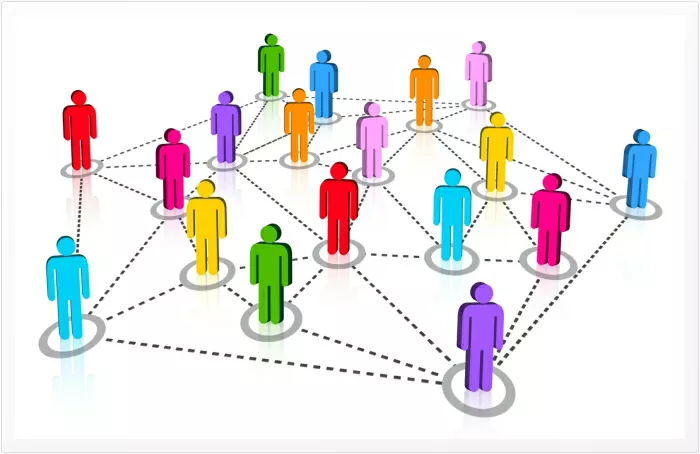
Psychosocial determinants are those factors which take into consideration the interactions between SOCIAL and individual PSYCHOLOGY.
We are all governed by psychological processes such as thoughts, feelings and meanings and all of us live in a social context of one sort or another.

Models of Mental Health: Differing Perspectives
The main models of mental health highlight the interplay of biological, psychological, and social factors in determining an individual’s mental well-being.
The Biopsychosocial Model recognises the influence of genetics, psychological traits and socioenvironmental factors on mental health.

Post-Traumatic Growth: The Positive Effects of Trauma
Post Traumatic Growth is closely linked to to the idea of resilience and describes the positive effects that experiencing trauma can have on a person.
There is an underlying assumption that experiencing any kind of traumatic event must somehow result in either negative outcomes or, for some, Post Traumatic Stress Disorder (PTSD).